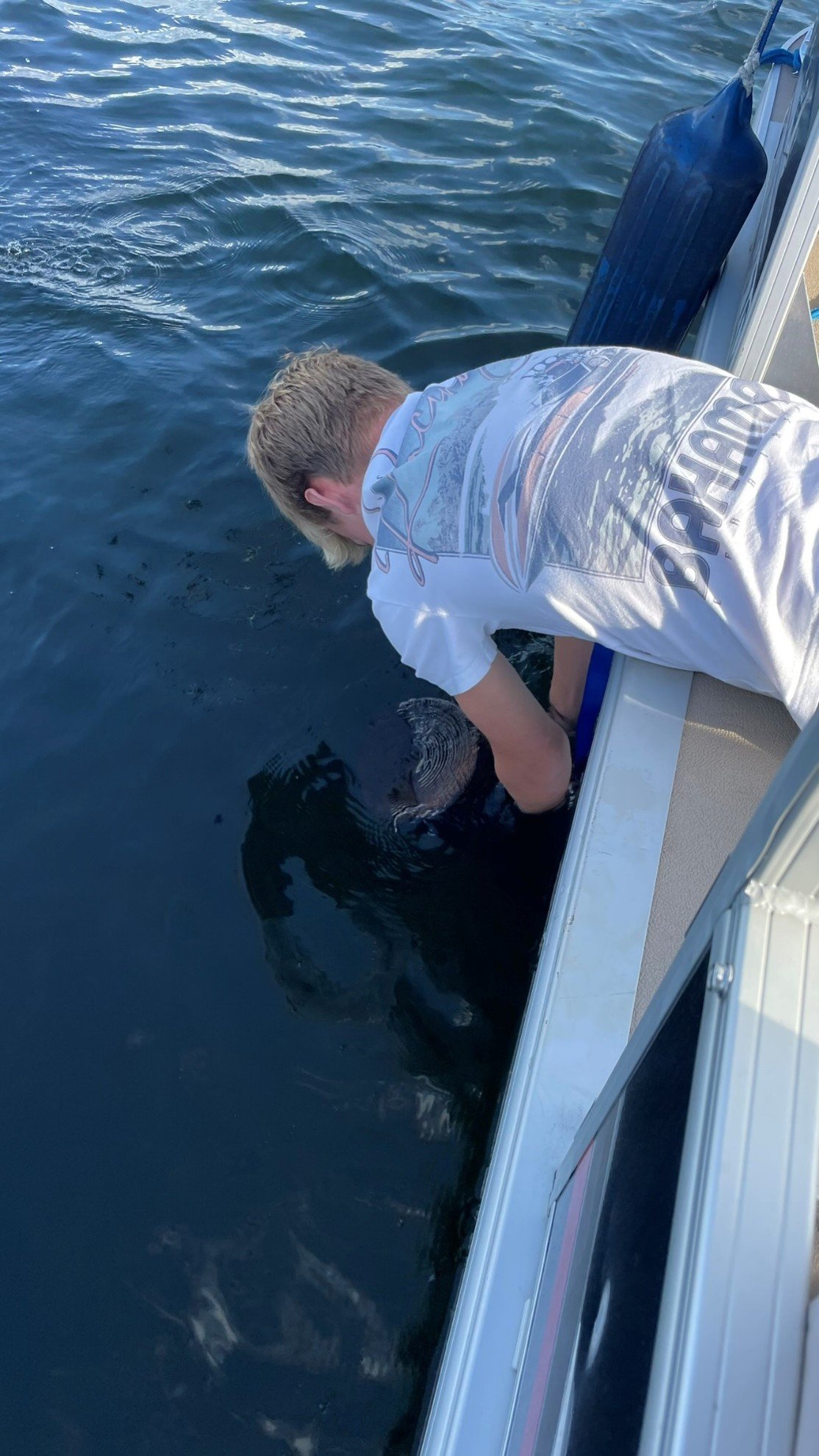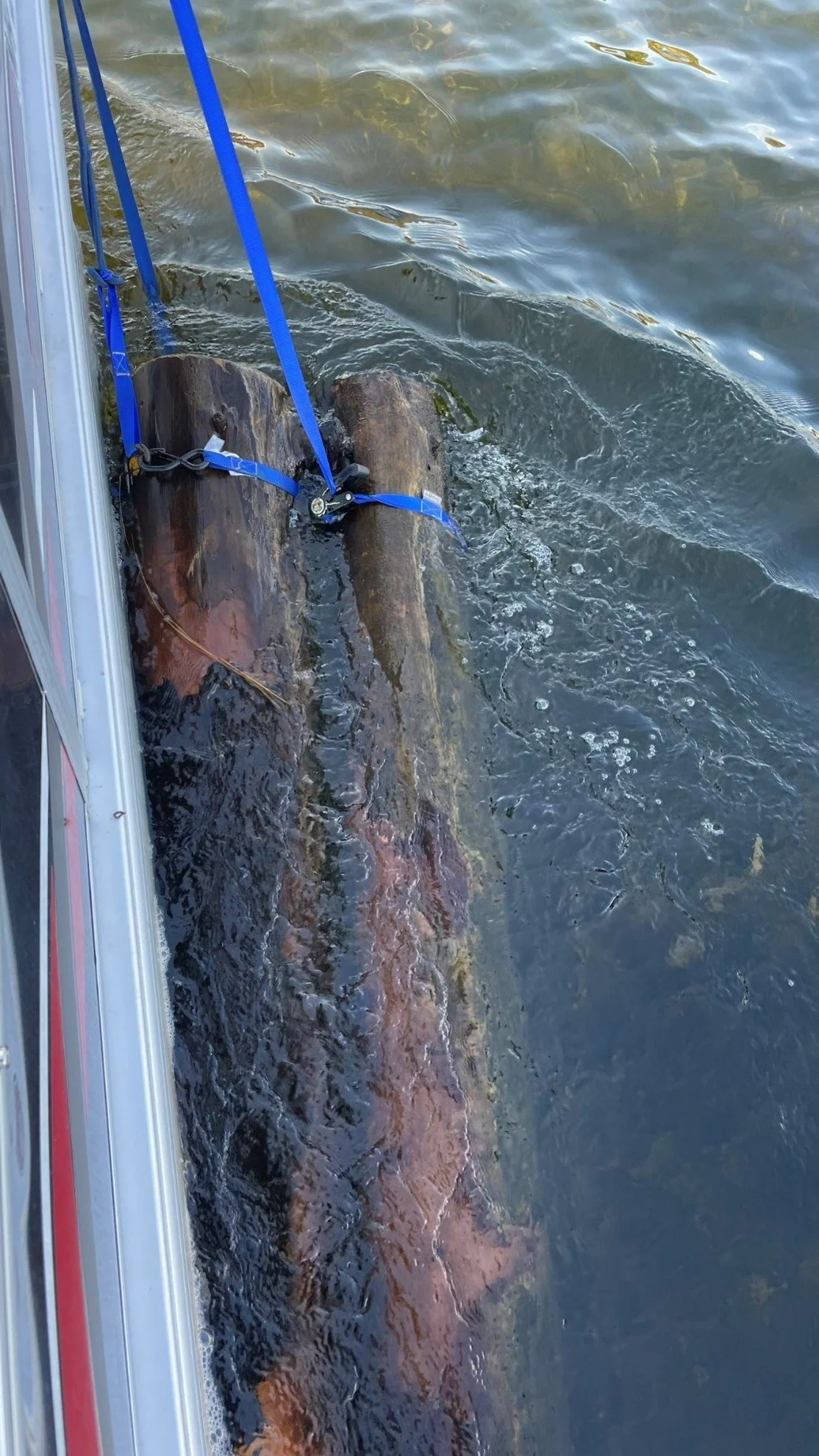
A beautiful day on Canobie Lake set the stage for an extraordinary adventure: wrangling logs submerged beneath the surface for over eight decades. Every year, a volunteer team embarks on a mission to pull pieces of history that surface every year on Canobie Lake by the Hayes Hart boat ramp. Here’s the history of why these logs pop up in the lake.
We look back to the devastating 1938 hurricane that swept across the northeastern United States; a unique and largely forgotten chapter in the history of forestry management unfolded on the shores of Canobie Lake, New Hampshire. The US Forestry Service, faced with an overwhelming surplus of lumber and the potential for economic loss and ecological disaster, embarked on an ambitious project to preserve thousands of white pine logs beneath the waters of this tranquil lake.
The hurricane of 1938 left an unprecedented trail of destruction in its wake, with millions of acres of forestland devastated and an estimated 2.5 billion board feet of lumber strewn across the region. In New Hampshire alone, over 300 million board feet of white pine lay downed and damaged. Faced with an extreme oversupply of timber, market forces threatened to leave landowners, loggers, and manufacturers with negligible profits, creating a situation where forests were perceived as both income and bank accounts for those who owned them.
As the US Forestry Service surveyed the wreckage, officials became increasingly concerned about the consequences of not salvaging the downed wood. Rotting timber would create significant insect, disease, and fire hazards, compounding the economic losses already suffered by local communities. To address this crisis, the federal government tasked the US Forestry Service with an innovative and unprecedented solution: preserving the white pine logs in designated lakes and ponds across New Hampshire, Massachusetts, and Connecticut.
Under the direction of the US Forestry Service, loggers set to work cutting the logs into specific lengths and branding each end with the letters "US" before transporting them to selected waterways. In Canobie Lake, thousands of white pine logs were carefully sunk to protect them from decay and create a submerged stockpile of timber. The US Forestry Service ultimately paid landowners approximately $1.5 million for the white pine logs lost in the hurricane, part of a larger effort to recover and salvage the devastated timber resources.
Storing the logs underwater in Canobie Lake was a clever conservation effort. However, an overwhelming post-storm lumber glut and the rapid rise of modern, industrial building supplies eventually rendered the timber economically worthless. Today, these sunken logs linger not as commercial assets, but as an ongoing challenge; each year we seek volunteers to help remove the logs that come to the surface.
Please email info@canobielake.org if you would like to volunteer to help remove these logs.